
“In the digital abyss, between forgotten passwords and corrupted hard drives, lies a treasure worth billions — lost Bitcoin waiting to be reclaimed.”
Welcome to the underground. Somewhere in the chaos of blockchain’s immutable ledger, approximately 3.7 million BTC remain forever lost — locked in wallets whose owners forgot their seed phrases, threw away hard drives, or simply vanished into the digital ether. That’s roughly $150+ billion in frozen assets, more than the GDP of many countries.
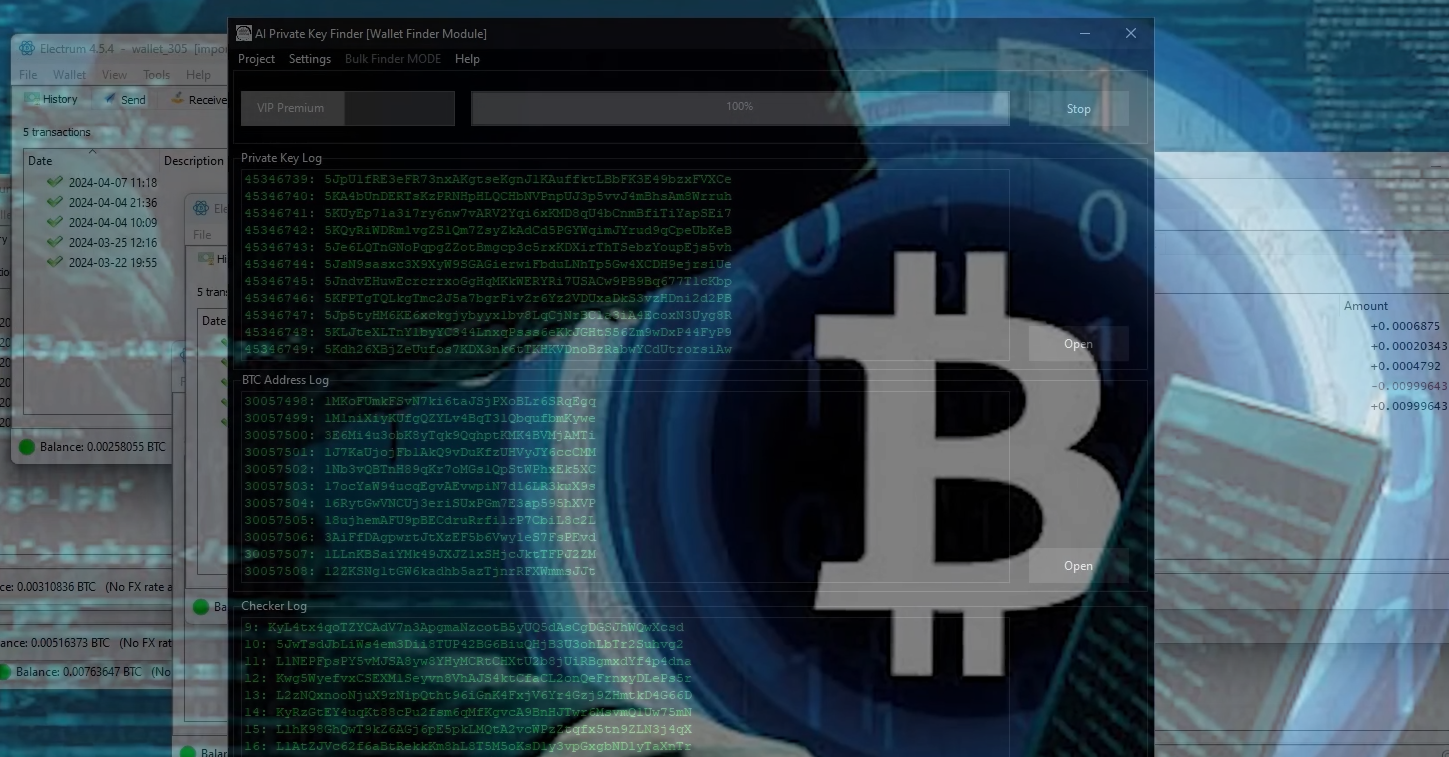
But here’s the dirty little secret the crypto establishment doesn’t want you to know: recovering lost bitcoin isn’t impossible. Whether you’re trying to crack your own forgotten wallet, hunting for abandoned BTC addresses, or exploring the grey zones of cryptocurrency archaeology — modern AI tools have changed the game entirely.
This isn’t your typical “backup your seed phrase” lecture. This is a deep dive into the real methods hackers, recovery specialists, and opportunistic crypto hunters use to find and access bitcoin wallets. From brute force attacks to AI-powered seed phrase generation, from mining abandoned addresses to exploiting the mathematical weaknesses in wallet generation — we’re covering it all.
The cryptocurrency recovery industry has evolved from basement hobbyists running basic scripts to sophisticated operations employing machine learning, distributed computing, and blockchain forensics. What once required supercomputers now runs on consumer hardware enhanced by intelligent algorithms. The playing field has been leveled — and the game has never been more accessible.
Every day, new wallets join the ranks of the abandoned. Exchange closures, inheritance disputes, hardware failures, and simple human forgetfulness continue feeding this ever-growing pool of recoverable assets. The question isn’t whether these bitcoins can be found — it’s who will find them first.
⚡ SYSTEM ALERT ⚡
If you’ve ever mined bitcoin “for fun” in 2011, received BTC as payment years ago, or simply forgot where you stored your keys — this guide might just change your financial future. The blockchain remembers everything. Your wallet still exists. The only question is: can you find the key?
How to Recover Lost Bitcoin Wallet: Step-by-Step Guide
Before diving into recovery methods, you need to know what you’re dealing with. Each wallet type requires different attack vectors and recovery strategies. The cryptocurrency ecosystem has evolved dramatically since Bitcoin’s inception, spawning dozens of wallet implementations with varying security models, backup mechanisms, and vulnerability profiles.
Understanding wallet architecture is crucial for any recovery attempt. Different wallets store keys differently, use different encryption schemes, and leave different forensic traces on your devices. A methodical approach based on wallet type dramatically improves your chances of successful bitcoin wallet recovery.
- Software Wallets — wallet.dat files (Bitcoin Core), Electrum databases, mobile app backups. These desktop and mobile applications store encrypted keys locally. Bitcoin Core uses Berkeley DB format with wallet.dat containing all private keys. Electrum stores encrypted seeds in JSON format. Mobile wallets typically use SQLite databases with app-specific encryption. Recovery involves locating these files and either decrypting them or extracting key material directly.
- Hardware Wallets — Ledger, Trezor, KeepKey devices requiring seed phrase recovery. These devices store keys in secure elements, making direct extraction nearly impossible. However, the 24-word recovery seed can restore full wallet access on any compatible device. Lost hardware wallet? Your seed phrase is your lifeline. Lost seed phrase? The AI Seed Phrase Finder becomes your last hope for partial recovery scenarios.
- Paper Wallets — Physical printouts with private keys in WIF or HEX format. Once popular for cold storage, paper wallets present unique recovery challenges. Faded ink, physical damage, and OCR errors complicate extraction. However, their simplicity also means recovery tools can work directly with extracted key material without dealing with encryption layers.
- Brain Wallets — Passphrases stored only in memory, highly vulnerable to dictionary attacks. These deterministic wallets derive keys from memorable phrases. The critical flaw: humans are predictably bad at randomness. Phrases like song lyrics, quotes, or simple passwords have already been swept by automated scanners. If you used a truly random passphrase and forgot it — AI-powered recovery offers better odds than traditional brute force.
- Exchange Wallets — Custodial accounts with potential password recovery options. Unlike self-custody solutions, exchange wallets may offer traditional account recovery through email verification, identity documents, or support tickets. However, defunct exchanges like Mt. Gox demonstrate that custodial solutions carry their own catastrophic risks.
Data Recovery from Old Devices
The first rule of bitcoin recovery: NEVER format suspicious storage devices. That old laptop, USB drive, or external HDD might contain the keys to a fortune. Even “deleted” files persist on storage media until overwritten — and forensic data recovery techniques can resurrect them.
Digital archaeology requires patience and proper methodology. Before touching any potential bitcoin-containing device, create a bit-for-bit image. Work only on copies, never originals. The cryptocurrency forensics field has developed specialized techniques for extracting wallet artifacts from damaged, formatted, or encrypted media.
Modern data recovery goes far beyond simple undelete utilities. Sector-level scanning can find wallet signatures even on heavily fragmented drives. Memory forensics can extract keys from RAM dumps and hibernation files. Even overwritten sectors sometimes retain partial data recoverable through advanced techniques.
Where to Search for Wallet Files
- Windows:
%APPDATA%\Bitcoin\,%APPDATA%\Electrum\,%APPDATA%\Roaming\for various wallet apps. Don’t forget Windows.old folders after system upgrades, System Restore shadow copies, and Recycle Bin artifacts. The Registry may contain paths to wallet locations even if files were moved. - macOS:
~/Library/Application Support/Bitcoin/, Time Machine backups spanning years of history, iCloud sync folders that may contain inadvertent wallet copies. Spotlight index databases can reveal file existence even after deletion. - Linux:
~/.bitcoin/,~/.electrum/, home directory backups, and system snapshot volumes. Check /tmp for wallet artifacts, journald logs for wallet-related commands, and bash history for clues about wallet locations. - Mobile backups: iTunes/iCloud for iOS containing encrypted app data, Android device backups with wallet databases, Google Drive sync folders, WhatsApp/Telegram attachments where users may have shared seed phrases with themselves.
- Cloud storage: Dropbox, Google Drive, OneDrive — check for documents named “bitcoin,” “wallet,” “crypto,” “seed,” or “backup.” Many users uploaded seed phrases as photos or text documents, creating recoverable copies in cloud trash folders.
File Types to Hunt
wallet.dat— Bitcoin Core wallet database containing encrypted private keys and transaction history. Multiple versions may exist with different key collections.*.key,*.json— Various wallet exports including Electrum keystores, MetaMask vaults, and exchange withdrawal keys.seed.txt,backup.txt,recovery.txt— User-created backups often with predictable naming. Search for 12 or 24 sequential words matching BIP-39 wordlist.- Email archives — Many early users emailed themselves keys. Search inbox, sent, drafts, and deleted folders for bitcoin-related terms. Gmail’s search operators can find decade-old messages instantly.
- Screenshots and photos — Users photographed seed phrases or paper wallets. Check camera rolls, screenshot folders, and cloud photo backups. OCR tools can extract text from images.
- Password manager exports — LastPass, 1Password, KeePass exports may contain wallet credentials. Even password manager databases themselves might store seed phrases as secure notes.
💡 HACKER WISDOM 💡
“The best place to hide a private key is in plain sight — disguised as random text in a note file named ‘shopping_list.txt’. The worst place? In your memory. Human brains are excellent at forgetting 12 specific words in exact order. The best hackers know: digital forensics beats human memory every time.”
Professional Data Recovery Options
For physically damaged drives or complex recovery scenarios, professional intervention may be necessary. The cost of professional bitcoin recovery services ranges from hundreds to thousands of dollars — but potentially recovers millions. Know when DIY ends and expertise begins.
- Forensic data recovery specialists — Can recover data from damaged platters, failed heads, and degraded media. Clean room facilities prevent contamination during physical repairs. These experts work with law enforcement on criminal cases and understand chain-of-custody requirements. For high-value bitcoin recovery, their success rates justify premium pricing. Expect $500-$2000 for standard recovery, more for severe damage.
- Clean room recovery — For water/fire damaged drives requiring physical intervention. Specialized facilities maintain particle-free environments where technicians can open drive enclosures without introducing contaminants. Platter transplants, head replacements, and PCB repairs can resurrect drives that appear completely dead. Recovery from flood-damaged drives has saved countless wallet.dat files.
- Chip-off recovery — Extracting data directly from memory chips by desoldering them from damaged boards. Essential for recovering data from devices with failed controllers, encrypted SSDs with damaged firmware, or mobile devices with locked bootloaders. The raw NAND data can be processed to reconstruct filesystem structures and locate wallet artifacts.
- Forensic imaging specialists — Create verified copies of storage media for safe analysis. Write-blockers prevent accidental data modification. Hash verification ensures image integrity. Professional imaging preserves evidence quality for potential legal proceedings while enabling unlimited analysis on copies.
| Device Type | What to Look For | Recovery Tools | Difficulty | Success Rate |
|---|---|---|---|---|
| HDD/SSD | wallet.dat, keystore, seed backups | Recuva, R-Studio, PhotoRec, FTK Imager | Medium | 70-90% |
| USB Drives | Backups, seed files, paper wallet scans | TestDisk, GetDataBack, UFS Explorer | Low | 80-95% |
| Mobile Devices | App databases, SQLite, screenshots | Cellebrite, Oxygen Forensic, backup extraction | High | 40-70% |
| Cloud Storage | Email, Drive files, photo backups | Keyword search, API access, trash recovery | Low | 90%+ |
| Damaged Media | Any recoverable sectors | Professional clean room, chip-off | Very High | 30-60% |
Seed Phrase Recovery: Cracking BIP-39 Mnemonics
The Mathematics of Seed Phrases
A BIP-39 seed phrase isn’t just random words — it’s a carefully structured cryptographic key derived from entropy through a deterministic process. Understanding its structure is crucial for any recovery attempt and reveals both the security guarantees and attack surfaces of the mnemonic system.
The BIP-39 specification defines a standardized method for generating and validating mnemonic phrases. This standard ensures interoperability across wallets while maintaining cryptographic security. Every legitimate seed phrase follows precise mathematical rules — and these rules create opportunities for intelligent recovery when partial information is available.
- Word count: 12, 15, 18, 21, or 24 words corresponding to 128, 160, 192, 224, or 256 bits of entropy plus checksum. The 12-word format remains most common, balancing security with usability. Each additional word adds approximately 10.7 bits of entropy, exponentially increasing the search space.
- Vocabulary: 2048 standardized English words carefully selected for distinguishability. No two words share the same first four letters, minimizing transcription errors. Alternative wordlists exist for Chinese, Japanese, Spanish, and other languages — each adding another dimension to search space considerations.
- Entropy: 128-256 bits of randomness drawn from cryptographically secure sources. The randomness quality determines ultimate security — weak RNG implementations have compromised countless wallets despite the mathematical enormity of the theoretical keyspace.
- Checksum: Last word partially derived from SHA-256 hash of previous entropy. This validation mechanism rejects ~99.6% of random word combinations before any blockchain query. Smart recovery tools leverage checksum validation to eliminate invalid candidates instantly.
- Derivation path: BIP-44 defines how seed phrases generate specific addresses. The path m/44’/0’/0’/0/0 produces your first Bitcoin address. Understanding derivation helps verify recovered phrases generate expected addresses.
For a 12-word phrase, there are 2048^12 ≈ 5.4 × 10^39 possible combinations. That’s more than atoms in the observable universe. Traditional brute force would take longer than the age of the universe… unless you have partial information. And partial information is exactly what most people have — faded paper wallets, partially remembered phrases, corrupted backups with recoverable fragments.
Partial Seed Phrase Recovery
This is where things get interesting. If you remember 6 or more words in the correct order, recovery becomes feasible. The mathematics transform from impossible to merely difficult — and AI-powered tools transform difficult into achievable.
The key insight: each known word eliminates 2048 possibilities from that position. Known positions don’t just reduce the search space linearly — they enable targeted attacks that exploit the checksum validation and derivation mechanics. AI Seed Phrase Finder leverages these constraints to prioritize high-probability candidates.
Recovery Scenarios:
- 6 words known (correct order) → ~1.1 × 10^20 combinations → Hours to days with AI. The remaining 6 unknown positions each multiply the search space by 2048, but parallel processing and intelligent prioritization make this tractable.
- 8 words known → ~2.8 × 10^13 combinations → Minutes to hours. At this level, even consumer hardware running optimized code can enumerate possibilities within reasonable timeframes.
- 10 words known → ~4.2 × 10^6 combinations → Seconds. Roughly 4 million possibilities — trivial for modern computers. Recovery is essentially guaranteed with this much information.
- 11 words known → ~2048 combinations → Instant. A simple loop through the BIP-39 wordlist finds the answer immediately. Even accounting for potential position errors, exhaustive search completes in milliseconds.
- All 12 words known but wrong order → ~479 million permutations → Hours. If you have all words but forgot the sequence, permutation attacks succeed relatively quickly, especially with checksum filtering.
Tools for Seed Phrase Cracking
- BTCRecover — Open-source Python tool for partial seed recovery supporting multiple wallet types. Highly configurable with typo tolerance, position uncertainty, and custom wordlists. Excellent for DIY recovery attempts with technical users. Supports multi-threaded CPU processing and can leverage GPU acceleration for hash-intensive operations.
- Hashcat — GPU-accelerated password and phrase cracking optimized for raw speed. While primarily designed for password hashing, Hashcat’s rule-based attack modes apply to seed phrase permutations. Massive community providing optimized kernels for various attack scenarios.
- AI Seed Phrase Finder — Neural network-powered generation with real-time balance checking. Unlike tools requiring target address knowledge, AI Seed Phrase Finder discovers wallets with positive balances across the entire blockchain. The AI_Target_Search_Mode specifically handles partial seed recovery, using genetic algorithms to evolve candidate phrases toward valid solutions with intelligent prioritization based on learned patterns.
- SeedRecover — Specialized tool for common seed phrase errors including word substitutions, deletions, and transpositions. Handles scenarios where users misread or mistyped specific words during backup.
When the Seed is Completely Lost
Without any fragment of your seed phrase, traditional recovery is mathematically impossible. The 5.4 × 10^39 combinations cannot be searched within any human lifetime. However, alternative approaches exist for those willing to think creatively about cryptocurrency recovery.
The key shift: from recovering YOUR specific wallet to discovering ANY wallet with accessible funds. This paradigm change — from targeted recovery to opportunistic discovery — opens entirely different attack surfaces and success probabilities.
- Wallet vulnerability exploitation — Some wallets had weak random number generation creating predictable keys. The 2013 Android SecureRandom bug affected thousands of wallets. Blockchain.info’s RNG weakness created colliding keys. Early Electrum versions had reduced entropy. Wallets generated during these vulnerability windows remain searchable with dramatically reduced keyspaces.
- Pattern analysis — Brain wallets and weak seeds can be dictionary attacked. Common phrases, song lyrics, book quotes, and simple passwords have all been used as wallet seeds. Massive rainbow tables and precomputed databases cover billions of known weak seeds. If your brain wallet used any published text, it’s likely already compromised.
- AI-powered hunting — Scanning blockchain for accessible abandoned wallets. AI Seed Phrase Finder continuously generates valid BIP-39 phrases, checks derivation paths, and queries balances. The mathematics guarantee that every valid seed phrase corresponds to real addresses — some fraction of which contain abandoned funds. Running continuously, the system discovers these needles in the cosmic haystack.
- Social engineering recovery — Reconstructing seed phrases from human memory patterns. Professional hypnotherapists have helped bitcoin holders recover forgotten phrases. Memory palace techniques, context reinstatement, and guided recall sessions have documented success rates for partial recovery.
⚠️ HARSH TRUTH ⚠️
There’s no “password reset” for blockchain. No customer support will give you access. The mathematics are absolute. But mathematics can also be exploited — if you know where to look. Every day, the AI Seed Phrase Finder discovers wallets that their original owners cannot access. The question is: will you be the one making discoveries, or leaving your coins for others to find?
Biggest Lost Bitcoin Wallet Stories: Lessons from Crypto Graveyard
The history of Bitcoin is littered with tales of lost fortunes — cautionary stories that illustrate both the revolutionary nature of trustless money and its unforgiving consequences for the unprepared. These aren’t just anecdotes; they’re data points in the ongoing experiment of decentralized finance, and lessons for anyone serious about cryptocurrency security or recovery.
🗑️ James Howells: $900 Million in a Landfill
The most famous lost bitcoin story. In 2013, British IT worker James Howells accidentally threw away a hard drive containing 7,500 BTC. Today’s value: approximately $900 million. The story has become cryptocurrency’s most expensive lesson about physical backup security.
Howells mined bitcoin in 2009 when the network was young and blocks yielded 50 BTC rewards. Like many early miners, he stopped when bitcoin’s negligible value didn’t justify the electricity costs. The mining hardware sat in a drawer. During a house cleaning, his partner threw away items from his desk — including the specific hard drive containing wallet.dat.
Since 2013, Howells has been negotiating with Newport City Council to excavate the landfill. He’s offered 25% of recovered funds, hired environmental consultants, and proposed elaborate excavation plans. The council refuses, citing environmental concerns about disturbing methane-generating waste and potential groundwater contamination. The drive remains buried under thousands of tons of refuse, slowly degrading but potentially still recoverable with clean room data extraction.
The technical reality: hard drive platters can survive years in landfill conditions if the sealed enclosure remains intact. Professional data recovery from damaged drives succeeds in 30-60% of cases. The economic calculation — spending millions on excavation for a chance at hundreds of millions in bitcoin — would obviously work if certainty existed. Uncertainty is the killer.
🔐 Stefan Thomas: 7,002 BTC Behind a Forgotten Password
San Francisco programmer Stefan Thomas received 7,002 BTC as payment in 2011 for creating an animated video explaining Bitcoin. He stored them on an IronKey USB drive — a military-grade encrypted device that permanently destroys data after 10 failed password attempts. He’s used 8 attempts. Two remain. Current value: ~$235 million.
The IronKey’s security model, designed to protect corporate secrets, works exactly as intended — it’s just working against its owner now. The device uses AES-256 encryption with a hardware security module that enforces the attempt limit. There’s no software bypass, no firmware exploit, no metadata leak. The password — a variation of passwords Thomas commonly used in 2011 — exists somewhere in his memory or notes, but not in a form he’s successfully reconstructed.
Thomas has received countless offers from hackers, cryptographers, and recovery services. The legitimate ones explain they cannot help; the illegitimate ones seek to social-engineer access to the device itself. He’s considered cryogenic storage until quantum computers can crack AES, hypnotherapy to recover the password from memory, and simply accepting the loss. The device sits in a bank safety deposit box, a $235 million Schrödinger’s cat.
💀 Mt. Gox: 850,000 BTC — The Great Heist
In 2014, the world’s largest bitcoin exchange collapsed after losing 850,000 BTC to hackers. While 200,000 BTC were later found in an old-format wallet, the rest vanished into blockchain’s pseudonymous void. Creditors still await compensation a decade later.
Mt. Gox’s collapse wasn’t a single hack but a years-long bleeding through security vulnerabilities, transaction malleability exploits, and possible insider theft. The exchange’s databases were a mess, customer accounting was fiction, and the actual bitcoin holdings had been gradually drained since 2011. By the time the music stopped, the difference between claimed and actual reserves was catastrophic.
The aftermath created an entire industry of blockchain forensics. Tracking stolen Mt. Gox bitcoin became a proving ground for chain analysis techniques. Some coins were traced through mixers to other exchanges, leading to arrests. Others vanished through sophisticated laundering. The saga continues through Japanese bankruptcy proceedings, with creditors finally receiving partial repayment in 2024 — a decade after the collapse.
The Change Address Disaster: 8,999 BTC Gone
A Reddit 😱 user in 2017 sent 1 BTC without understanding change addresses. The remaining 8,999 BTC went to a temporary address he couldn’t access. A $300 million lesson in reading documentation.
Bitcoin’s UTXO model requires spending entire transaction outputs. If you have 9000 BTC and want to send 1 BTC, you send 9000, receive 1 at the destination, and 8999 as “change” to an address you control. Early wallets handled this automatically but opaquely. Users who didn’t understand the mechanism sometimes sent from watch-only wallets, used imported keys incorrectly, or simply didn’t have the change address in their backup.
This particular case involved imported keys and wallet misconfiguration. The lesson is universal: understand your tools before trusting them with life-changing sums. The change address exists on the blockchain, perfectly visible, balance preserved — but without the private key, those coins are as inaccessible as if they never existed.
| Case | Lost BTC | Cause | Status | Current Value | Lesson |
|---|---|---|---|---|---|
| James Howells | 7,500 | Discarded HDD | Buried in landfill | ~$900M | Physical backup security |
| Stefan Thomas | 7,002 | Forgotten password | Locked in IronKey | ~$235M | Password management |
| Mt. Gox | 650,000+ | Exchange hack | Partially recovered | ~$78B | Not your keys, not your coins |
| Change Address | 8,999 | User error | Lost forever | ~$1B | Understand your tools |
| QuadrigaCX | ~26,000 | CEO death | Allegedly lost | ~$3B | Custodial risk |
🎮 THE LESSON 🎮
“Blockchain doesn’t care if you’re a billionaire or a beginner. It treats everyone’s lost keys with the same cold, mathematical indifference. The only difference is the number of zeros in your tragedy. But here’s what the pessimists miss: the same mathematics that locks coins away forever also makes discovery possible. Every lost wallet is someone’s tragedy — and someone else’s opportunity. With AI Seed Phrase Finder, you can be on the discovering side of that equation.”
Bitcoin Private Key Finder: Methods and Tools
Understanding Private Key Formats
Private keys are the fundamental cryptographic secret enabling Bitcoin ownership. Unlike seed phrases that generate hierarchies of keys, a single private key corresponds to exactly one Bitcoin address. Understanding key formats is essential for any recovery operation, as different wallets export and import keys in different representations.
The same 256-bit number — your private key 🔑 — can be expressed in multiple formats. Each serves different purposes and has different characteristics for human readability, error detection, and wallet compatibility.
- HEX (64 chars): E9873D79C6D87DC0FB6A5778633389F4453213303DA61F20BD67FC233AA33262 — The raw mathematical representation. Pure hexadecimal encoding of the 256-bit private key. No error detection, easily corrupted by transcription errors. Rarely used for storage but common in programming contexts and low-level wallet operations.
- WIF (51 chars): 5HueCGU8rMjxEXxiPuD5BDku4MkFqeZyd4dZ1jvhTVqvbTLvyTJ — Wallet Import Format, the standard for manual key transfer. Includes version byte and checksum for error detection. Keys starting with “5” indicate uncompressed public keys (legacy format). Base58Check encoding eliminates visually ambiguous characters (0, O, I, l).
- WIF-compressed (52 chars): Starts with K or L (e.g., KxFC1jmwwCoACiCAWZ3eXa96mBM6tb3TYzGmf6YwgdGWZgawvrtJ) — Modern format indicating compressed public key derivation. Produces different addresses than uncompressed keys from the same private key. All modern wallets use compressed keys by default. The “01” suffix before checksum indicates compression.
- Mini private key (30 chars): Format like S6c56bnXQiBjk9mqSYE7ykVQ7NzrRy — Compact format once used by Casascius physical bitcoins and some paper wallet generators. Encodes enough entropy for security while minimizing physical printing requirements.
Recovery Methods for Damaged Keys
Partial key recovery follows similar principles to seed phrase recovery but with different constraints. The 256-bit keyspace is technically smaller than BIP-39’s, but linear rather than word-based, requiring different attack strategies.
- OCR correction — For partially readable paper wallets. Trained models distinguish degraded characters, identify systematic printing defects, and suggest probabilistic corrections. A faded WIF key with 5 ambiguous characters creates manageable search spaces. Combining OCR confidence levels with checksum validation progressively identifies the ground truth.
- Character substitution attacks — Testing similar-looking characters systematically. For paper wallets, common confusions include: 0/O/Q, 1/l/I, 5/S, 8/B, 2/Z. A single ambiguous character in a 51-character WIF key multiplies possibilities by perhaps 5-10, not 58. Four ambiguous characters create ~10,000 candidates — easily enumerable.
- Checksum validation — WIF format includes built-in validation enabling instant rejection of invalid candidates. The last 4 bytes are SHA-256(SHA-256(payload)). Any modification to the key portion invalidates the checksum. This allows testing millions of candidates per second, filtering to the rare valid cases.
- Partial key attacks — If significant portions of key material are known, baby-step giant-step and Pollard’s rho algorithms can recover the remainder faster than brute force. Security assumptions rely on FULL key secrecy; partial disclosure cascades into accelerated compromise.
- Pattern analysis — Keys generated by weak RNG often show patterns. Early blockchain.info wallets reused random inputs. Some paper wallet generators used predictable seeds. Recognizing the generator from key characteristics enables targeted attacks exploiting known weaknesses.
AI Private Key Generation
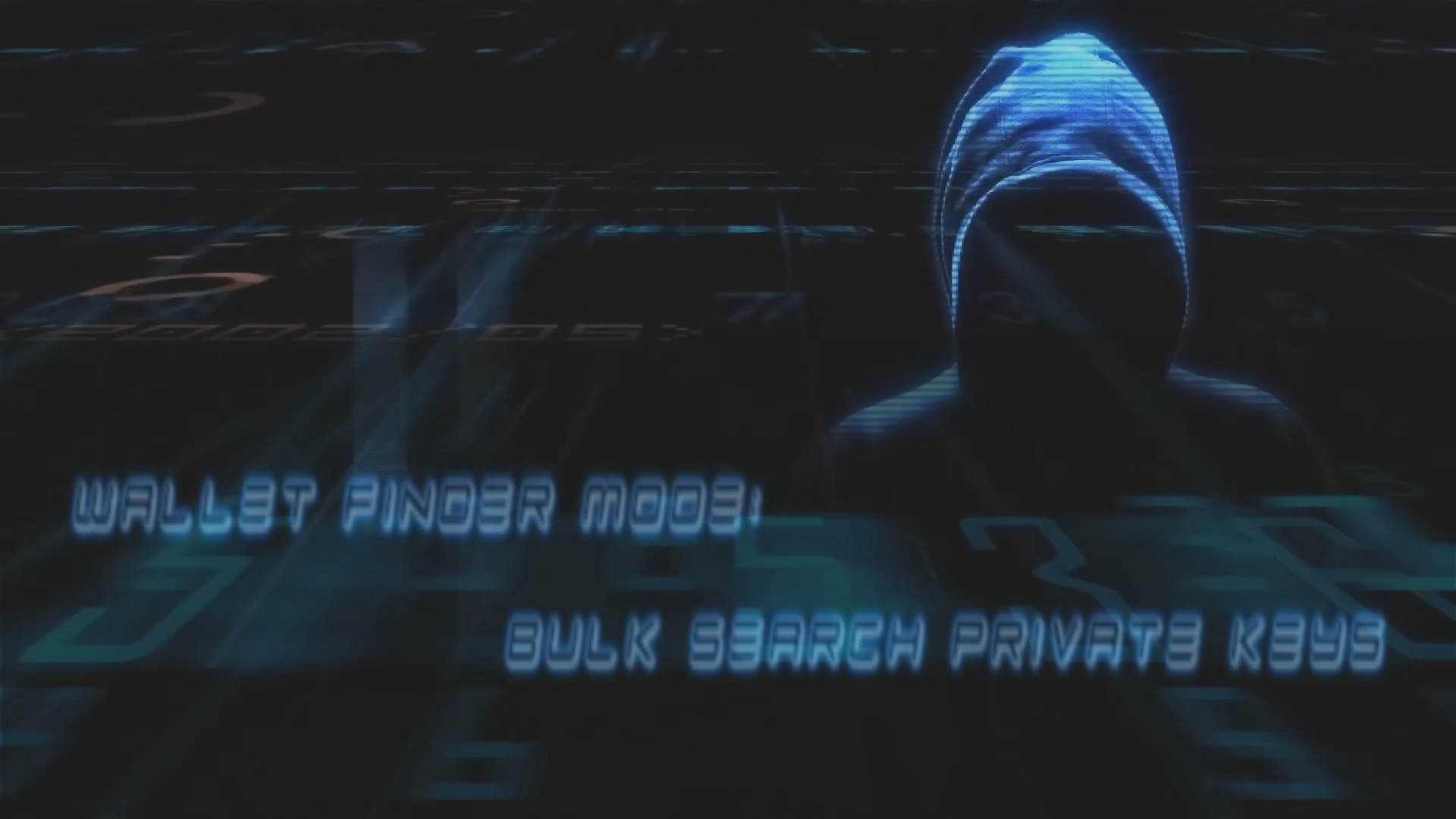
The AI Private Key Finder module within AI Seed Phrase Finder operates in two modes, each targeting different use cases in cryptocurrency recovery and discovery:
- Bulk Finder Mode — Mass generation and balance checking across random keys. The system generates valid private keys, derives corresponding addresses (both compressed and uncompressed), and queries blockchain APIs for positive balances. Unlike naive random generation, the AI component prioritizes keyspaces with historical vulnerability indicators, known weak generation patterns, and statistical anomalies suggesting prior compromise. Running continuously, this mode discovers abandoned wallets across the entire Bitcoin keyspace.
- Target Mode — Reverse-engineering keys for specific addresses, particularly effective against Vanity addresses. When users generate custom addresses starting with specific characters (1Love…, 1Hash…), they typically use deterministic processes exploitable by pattern analysis. Target Mode also applies to known vulnerable keyspaces — ranges generated by specific wallet versions during specific timeframes with known weaknesses. Provide an address, and the system focuses computational resources on likely attack surfaces.
The integration of AI transforms private key hunting from random lottery to intelligent prospecting. Machine learning models trained on historical discoveries identify patterns invisible to simple enumeration. Genetic algorithms evolve candidate keys toward balance-positive addresses. The result: discovery rates orders of magnitude higher than random chance, though still dependent on the fundamental reality that most keyspace remains empty.
🔐 CRYPTOGRAPHIC REALITY CHECK 🔐
“Pure random key search is mathematically hopeless — 2^256 is beyond comprehension. But nobody generates truly random keys. Humans are predictable. Software is flawed. And AI is exceptionally good at exploiting both. The AI Seed Phrase Finder doesn’t search randomly; it hunts intelligently.”
Bitcoin Brute Force Attack: Can You Crack a Wallet?
The Mathematics of Brute Force
Let’s address the elephant in the room: can you brute force a bitcoin wallet? The short answer is: it depends entirely on what you’re attacking. Understanding the precise mathematics separates realistic recovery attempts from fantasy, and guides tool selection toward productive approaches.
The term “brute force” encompasses a spectrum of attacks from pure exhaustive search to intelligent hybrid approaches. The feasibility of any specific attack depends on keyspace size, available computational resources, time constraints, and partial information that reduces the search space.
Private Key Space Analysis
A bitcoin private key is a 256-bit number. The total keyspace is 2^256 ≈ 1.16 × 10^77 possible keys. To put this in perspective and understand why pure brute force fails:
- Atoms in the observable universe: ~10^80 — The entire physical universe contains only ~1000x more atoms than possible Bitcoin keys. Searching even a tiny fraction of keyspace requires resources exceeding human civilization’s total capacity.
- Nanoseconds since the Big Bang: ~4.3 × 10^26 — Convert every nanosecond of cosmic history into a key check, and you’ve covered a vanishingly small fraction of possibilities.
- If every atom was a supercomputer trying billions of keys per second — The entire universe converted to maximum-speed computers running for the entire age of the universe would check roughly 10^100 keys. Still 10^-77 of the total keyspace. Still functionally zero progress.
- Thermodynamic limits: The Landauer principle establishes minimum energy per bit operation. Searching 2^256 keys would require energy exceeding the sun’s total output over its lifetime. Physical laws prevent brute forcing properly random 256-bit keys.
What CAN Be Brute Forced
Despite keyspace enormity, many real-world wallets are vulnerable because they don’t use the full theoretical keyspace. Weak implementations, human tendencies, and software flaws create exploitable windows:
- Weak passwords on encrypted wallets — Dictionary attacks on wallet.dat encryption using common passwords, variations, and rule-based mutations. A wallet.dat encrypted with “password123” falls in seconds. Even moderately complex passwords yield to GPU-accelerated attacks over days or weeks. The wallet encryption is only as strong as the password protecting it.
- Brain wallets — Passphrases like “password123,” song lyrics, book quotes, or memorable phrases are instantly cracked using precomputed rainbow tables covering billions of known strings. Any brain wallet using searchable text has already been swept. The only safe brain wallets use truly random passphrases — and humans rarely generate those.
- Short/weak seeds — Some early wallets used poor RNG producing predictable keys. The 2013 Android SecureRandom bug reduced effective entropy to ~32 bits — trivially searchable. Blockchain.info’s weak RNG produced ~15,000 predictable wallets, most long since emptied by hunters.
- Partial information — Known portions of keys/seeds dramatically reduce search space. Knowing 80% of a seed phrase reduces search from cosmic impossibility to hours. Partial wallet.dat recovery with known structure enables targeted attacks on remaining unknowns.
- Pattern-based attacks — Exploiting human predictability in “random” choices. People choosing seed words favor familiar terms. Password variations follow predictable patterns. Keyboard walks, birthdays, and personal information create tiny islands of probability in the keyspace ocean.
- Vanity address generation weaknesses — Tools like Profanity used flawed algorithms enabling key recovery from address patterns alone. Thousands of ETH addresses generated with Profanity were compromised in 2022, demonstrating that vanity comes at security cost.
GPU vs CPU vs AI for Brute Force
Hardware selection dramatically impacts attack speed. Modern GPUs provide 100-1000x speedup over CPUs for parallelizable operations like hash computation. But hardware alone hits limits — AI provides the next multiplicative factor through intelligent candidate selection.
| Method | Speed (keys/sec) | Use Case | Practical Limit |
|---|---|---|---|
| CPU (single thread) | ~1,000 | Testing concepts, small searches | ~10^8 keys/day |
| CPU (multi-thread) | ~10,000 | Small-scale recovery attempts | ~10^9 keys/day |
| GPU (consumer) | ~100,000,000 | Password cracking, partial recovery | ~10^13 keys/day |
| GPU Cluster | ~1,000,000,000 | Serious recovery operations | ~10^14 keys/day |
| AI + Supercomputer | ~1,000,000,000,000 | Intelligent seed generation | Dependent on pattern exploitation |
Why AI Beats Traditional Brute Force
Pure brute force is dumb — it tries every combination regardless of probability. AI-powered tools like AI Seed Phrase Finder apply intelligence to narrow the search space before exhaustive enumeration:
- Neural networks — Predict likely word combinations based on known patterns of wallet generation, user behavior, and language models. Rather than treating all 2048 words equally, AI weights candidates by probability of occurrence in real-world seeds.
- Genetic algorithms — Evolve candidate phrases toward valid solutions. Starting populations mutate and crossover, with fitness functions selecting phrases closer to checksum validity and known patterns. Over generations, solutions emerge faster than random search.
- Statistical analysis — Exploit human tendencies in “random” seed generation. Users avoid unfamiliar words, favor short words, create memorable sequences. These biases create non-uniform probability distributions that intelligent search exploits.
- Parallel processing — Distribute search across cloud infrastructure. AI Seed Phrase Finder leverages server farms for cryptocurrency recovery computations, providing computing power beyond individual hardware capacity.
- Transfer learning — Models trained on successfully recovered wallets improve predictions for future attempts. Each discovery teaches the AI about real-world patterns, progressively improving success rates.
🧠 INTELLIGENCE BEATS BRUTE FORCE 🧠
A hammer can break a lock — eventually. A locksmith opens it in seconds. AI is the locksmith of the blockchain world. The AI Seed Phrase Finder doesn’t search randomly; it hunts intelligently, prioritizing candidates most likely to succeed based on everything we know about how wallets were actually created, used, and abandoned.
Bitcoin Wallet Hacking: Attack Vectors and Vulnerabilities
Common Wallet Vulnerabilities
Despite blockchain’s cryptographic security, wallets themselves have exploitable weaknesses. The immutable ledger is mathematically sound, but the software managing keys — written by fallible humans — contains bugs, shortcuts, and security oversights. Understanding these vulnerabilities informs both defense and recovery strategies.
Software Vulnerabilities
- Weak RNG (Random Number Generation) — Early Android Bitcoin Wallet and similar apps used predictable random number generation. The SecureRandom implementation reused seeds, creating mathematically related keys across users. Researchers enumerated the weak keyspace and swept vulnerable wallets. Wallets created during vulnerability windows remain searchable today. AI Seed Phrase Finder includes models targeting known weak RNG pattern ranges.
- Memory leaks — Keys remaining in RAM after wallet closes, recoverable from memory dumps, hibernation files, or swap partitions. Some wallets failed to zero sensitive memory after use, leaving plaintext keys in forensically recoverable locations. Even locked wallets might have key material persisting in process memory.
- Clipboard hijacking — Malware replacing copied addresses with attacker-controlled destinations. Users copy their receive address, malware intercepts and substitutes, funds go to attackers. Some sophisticated variants monitor clipboard for private key formats and exfiltrate them.
- Keyloggers — Capturing seeds during wallet creation or password entry. Screen capture malware photographs seed word displays. Hardware keyloggers between keyboard and computer log every keystroke. Recovery from keylogger-compromised systems requires treating all entered credentials as exposed.
- API vulnerabilities — Web wallets and mobile apps communicating over insecure channels. Man-in-the-middle attacks intercepting API calls can steal authentication tokens or transaction signing requests. Some historical exchange APIs leaked private keys in debug logs.
- Supply chain attacks — Compromised wallet software distributing backdoored versions. Hardware wallet firmware with hidden key exfiltration. Compromised dependencies in open-source wallet projects. Trust in wallet software is trust in everyone who touched the code.
Human Factor Exploits
- Phishing — Fake wallet apps stealing seeds on first entry. Cloned websites asking users to “verify” seeds for nonexistent airdrops. Email campaigns directing users to malicious dApps. The majority of cryptocurrency theft involves social engineering, not technical exploitation.
- Social engineering — Tricking users into revealing backup phrases through fake support channels, impersonated team members, or fabricated emergency scenarios. Telegram groups impersonating legitimate projects harvest seeds from confused users seeking help.
- Physical access — Extracting keys from unlocked devices, photographing displayed seeds, accessing unencrypted backup files. The “evil maid” attack against unattended hardware wallets during travel. Rubber hose cryptography — forcing disclosure through physical coercion — remains devastatingly effective.
- Inheritance and relationship attacks — Family members with physical access, disgruntled employees with system credentials, ex-partners who observed security practices. Trust boundaries in cryptocurrency extend to everyone who’s ever been alone with your devices.
Historical Wallet Exploits
- 2013: Android SecureRandom bug — Weak random numbers led to predictable keys. Apps using Java’s SecureRandom without explicit seeding received identical or related random streams. Thousands of wallets used mathematically related keys. Attackers enumerated the weak keyspace and stole funds. Wallets generated during this period remain vulnerable to targeted search.
- 2014: Blockchain.info vulnerability — Some wallets shared random number inputs due to RNG seeding flaws. Approximately 15,000 accounts generated with predictable entropy. The company attempted quiet patching, but researchers published findings, enabling widespread exploitation of remaining vulnerable wallets.
- 2017: Parity Wallet bug — $280M in ETH frozen due to code flaw when a user accidentally “killed” the library contract required for wallet operations. While not private key theft, this demonstrated that smart contract wallets introduce novel failure modes beyond traditional private key security.
- 2021: Profanity Vanity Address exploit — Weak key generation in popular Ethereum vanity address tool allowed recovery of private keys from address patterns alone. Over $3.3M stolen from affected addresses. Demonstrated that performance optimizations in cryptographic tools create security vulnerabilities.
- 2022: Slope wallet compromise — Seed phrases transmitted to centralized servers in plaintext due to debugging code left in production. Thousands of Solana wallets compromised. Mobile wallet developers acknowledged the breach only after community investigation.
Legitimate Uses for Hacking Knowledge
Understanding attack vectors isn’t just for malicious actors. Defensive security requires offensive knowledge. Recovery operations apply the same techniques. The same AI Seed Phrase Finder that could theoretically attack random wallets proves invaluable for legitimate recovery:
- Recovering your own lost wallets — Same techniques, ethical application. Partial seed recovery, weak password attacks against your own wallet.dat, searching your own vulnerable keyspace if you generated during known bug windows.
- Security auditing — Testing your own infrastructure before attackers do. Attempting to crack your own wallet encryption validates password strength. Auditing your seed backup procedures using recovery techniques reveals weaknesses before they matter.
- Abandoned wallet hunting — Finding truly orphaned coins. Wallets dormant for years without activity increasingly represent lost rather than held funds. AI Seed Phrase Finder targets this space, discovering coins whose owners have passed away, lost keys irretrievably, or simply forgotten their cryptocurrency experiments.
- Academic research — Improving cryptocurrency security through understanding attacks. Published research on wallet vulnerabilities leads to protocol improvements, better software practices, and user education.
- Forensic investigation — Tracing stolen funds, supporting law enforcement, recovering assets from defunct entities. The techniques of wallet analysis serve legitimate investigative purposes.
⚠️ LEGAL NOTICE ⚠️
Accessing wallets you don’t own is illegal. This guide is for educational purposes, recovering your own assets, and understanding security. What you do with this knowledge is your responsibility. AI Seed Phrase Finder is designed for recovering abandoned wallets and personal recovery scenarios. The line between recovery and theft is the question of ownership — and that question has legal answers you must respect.
Earn Bitcoin from Abandoned Wallets: The Treasure Hunter’s Guide
According to Chainalysis, approximately 20% of all mined bitcoin sits in dormant wallets — addresses that haven’t moved coins in years. Some are held by patient investors practicing extreme hodling. Many are simply abandoned — their owners having lost keys, forgotten passwords, passed away without succession planning, or simply lost interest when Bitcoin was worth pennies.
This dormant fraction represents the largest passive income opportunity in cryptocurrency. Not through staking, lending, or trading — but through recovery of what’s already been lost. The coins exist. The blockchain records them. They’re waiting for someone with the right keys — keys that AI Seed Phrase Finder can discover.
What Makes a Wallet “Abandoned”?
- No transactions for 5-10+ years — Extended dormancy strongly correlates with lost access rather than patient holding. Most long-term holders consolidate, earn interest, or at least check balances. Complete inactivity suggests inability rather than choice.
- Owner deceased without passing keys to heirs — Cryptocurrency inheritance remains poorly planned. Early adopters have aged and died, their coins orphaned by neglected succession planning. Billions in BTC are effectively buried with their owners.
- Lost access (forgotten seeds, destroyed devices) — The most common abandonment mechanism. Hard drives crashed, paper wallets discarded, brain wallets forgotten. The coins remain; access doesn’t.
- Early miners who lost interest when BTC was worth pennies — Millions of BTC were mined when the reward was 50 BTC per block and value was negligible. Many early miners treated coins as curiosities, not assets. Formatted computers, discarded hardware, forgotten accounts.
- Dust and small balances — Wallets with tiny amounts not worth the transaction fees to move. Accumulative dust across thousands of abandoned addresses adds up to significant sums.
How AI Seed Phrase Finder Creates Passive Income
The AI_Mode functionality turns your computer into a 24/7 treasure hunting machine, continuously generating and validating potential access credentials against the entire Bitcoin blockchain:
- Mass generation — AI generates billions of potential seed phrases using intelligent prioritization. Rather than pure random generation, neural networks guide toward statistically likely combinations based on known wallet generation patterns, human tendencies, and historical vulnerability windows.
- Validity check — Filters for BIP-39 compliant combinations using checksum validation. Invalid candidates are rejected instantly, focusing computational resources on mathematically possible seeds. Approximately 99.6% of random word combinations fail checksum validation.
- Address derivation — Valid seeds are processed through hierarchical deterministic derivation producing all standard address formats: Legacy (1…), SegWit (3…), and Native SegWit (bc1…). Multiple derivation paths cover different wallet implementations.
- Balance verification — Queries blockchain APIs and local node databases for positive balances. Only addresses with recoverable funds proceed to logging. Real-time balance checking ensures discoveries are actionable.
- Results logging — Saves discovered wallets with their seed phrases, derived addresses, and confirmed balances. Export to Excel enables sorting by balance for prioritized withdrawal. Telegram integration provides instant notification of significant finds.
Expected Returns and Timeframes
| License Tier | Generation Speed | Estimated Finds/Month | Typical Balance Range |
|---|---|---|---|
| Demo | Basic (testing) | 0-1 small wallets | Dust to 0.001 BTC |
| Lite | 10x faster | 1-3 wallets | 0.001-0.01 BTC typical |
| VIP Premium | 100x faster | 5-10+ wallets | Variable, occasional larger finds |
| Elite Force | Max server priority | Varies significantly | Includes private key finder module |
Ethical Considerations
The crypto community debates the ethics of abandoned wallet hunting. Different perspectives illuminate the complexity:
- Pro: Returns coins to circulation, improves market liquidity, clears blockchain “dust.” Coins frozen forever serve no one. Recovery reanimates dead assets, benefiting finders and the ecosystem.
- Con: Some “abandoned” wallets may have living owners who’ve simply held patiently. Not all dormancy equals loss. Recovery from an active holder constitutes theft regardless of inactivity duration.
- Best practice: Focus on wallets dormant 5-7+ years with no activity. Check address history for patterns suggesting loss versus holding. Consider that truly lost coins harm the ecosystem through permanent supply reduction.
- Legal reality: Ownership remains with original holders regardless of activity. Discovery of access credentials doesn’t confer ownership rights. Users bear responsibility for jurisdictional compliance.
🎰 THE BITCOIN LOTTERY 🎰
Unlike traditional lotteries, this one runs on mathematics, not luck. Every valid seed phrase EXISTS as a mathematical entity — the question is which ones connect to wallets with balance. AI shifts odds from astronomical to achievable. The more phrases checked, the more discoveries made. Time and computation convert probability into inevitability. With AI Seed Phrase Finder, you’re not gambling — you’re mining the mathematical certainty of lost coins.
Free Bitcoin Methods: Separating Scams from Real Opportunities
The “Free Bitcoin” Landscape
Search “free bitcoin” and you’ll drown in scams. Fake generators, phishing sites, advance-fee frauds, and Ponzi schemes dominate the results. But legitimate methods exist — they’re just not what most people expect. Understanding the landscape protects from scams while identifying real opportunities.
Legitimate Free Bitcoin Sources
- Faucets — Tiny amounts (satoshis) for completing tasks, solving captchas, viewing ads. Once provided meaningful amounts when BTC was cheap; now yield pennies per hour. Legitimate but mathematically insignificant given current prices. Best viewed as educational rather than profitable.
- Airdrops — New crypto projects distributing tokens to build community and liquidity. Requires research to identify legitimate projects, wallet setup for receiving tokens, and patience for value appreciation. Most airdrop tokens become worthless; rare winners provide substantial returns.
- Staking rewards — Earn by securing proof-of-stake networks. While Bitcoin itself uses proof-of-work, wrapped BTC and Bitcoin Layer 2 solutions offer staking opportunities. Requires capital lockup and smart contract risk acceptance.
- Mining — No longer “free” due to electricity costs exceeding individual rewards. Industrial scale mining remains profitable; hobbyist mining is educational rather than profitable. Exception: joining mining pools with zero-cost electricity (solar, included utilities).
- Abandoned wallet recovery — The only method with significant potential returns for individuals without capital. AI Seed Phrase Finder enables discovery without upfront cryptocurrency investment. Software cost amortizes across unlimited future discoveries.
- Bounties and bug programs — Cryptocurrency projects pay for security research, content creation, and development contributions. Requires skills but provides legitimate paths to earning crypto.
Red Flags: Scam Indicators
- “Send 0.1 BTC, get 1 BTC back” — Classic advance fee fraud. No legitimate entity multiplies deposits. All such schemes steal the initial send.
- “Bitcoin generator” requiring your wallet key — Phishing for private keys. Legitimate software never needs your existing keys to generate new addresses.
- “Guaranteed returns” — Impossible in cryptocurrency. Any guarantee indicates fraud. Market volatility makes guarantees mathematically impossible.
- Celebrity endorsements — Usually fake. Elon Musk, Bill Gates, and others are impersonated constantly. Verify through official channels, not promoter claims.
- “Mining from browser” — CPU mining in 2025 generates fractions of pennies. “Cloud mining” contracts are typically Ponzi schemes.
- Pressure tactics — “Limited time offer” and urgency indicators signal manipulation. Legitimate opportunities don’t require immediate action.
Why Abandoned Wallet Hunting is Different
Unlike scams that take your bitcoin, legitimate recovery tools help you find bitcoin that’s mathematically accessible:
- No upfront BTC required — You’re not sending cryptocurrency to anyone. Software license is standard software purchase, not crypto investment.
- You control found seeds — No sharing with “processing centers” or third parties. Discovered credentials belong to you alone. No verification services that skim percentages.
- Based on cryptographic fundamentals, not get-rich-quick promises — The mathematics of BIP-39 and blockchain are established science. Discovery works because every valid seed phrase corresponds to real addresses. Some contain funds.
- Transparent methodology with verifiable results — Open about probability calculations, realistic about expectations, demonstrable through public blockchain verification of discovered addresses.
- Software you run locally — Not a web service that could substitute fake results or steal discovered keys. The AI Seed Phrase Finder runs on your machine, outputting to files you control.
Realistic Expectations
Let’s be clear: finding a million-dollar wallet is extremely rare. The massive discoveries make news precisely because they’re exceptional. Most discovered wallets contain small amounts — dust, test transactions, forgotten small purchases. Setting realistic expectations prevents disappointment while enabling sustainable, profitable operation:
- Small amounts add up over time — Many 0.001 BTC discoveries accumulate. The median find matters more than hoping for outliers.
- Occasional larger finds offset periods of minimal returns — Variance is high. Weeks with nothing followed by significant discoveries. Long time horizons smooth volatility.
- The process is largely passive — set it and forget it — Once configured, AI Seed Phrase Finder runs unattended. Check results periodically. Minimal ongoing time investment.
- It’s mathematically impossible to lose money on software (unlike trading) — Fixed software cost, unlimited discovery potential. No market risk, no liquidation, no negative balance. Unlike trading or lending, discovered coins are pure upside.
- Compound your discoveries — Reinvest found coins into longer license periods, additional instances, or simply hold for appreciation. Small discoveries today may be worth significantly more tomorrow.
⚠️ REALITY CHECK ⚠️
Anyone promising “1 BTC per day FREE” is scamming you. Abandoned wallet hunting is real but requires patience, proper tools, and realistic expectations. It’s farming, not winning the lottery. AI Seed Phrase Finder provides the technology; mathematics provides the guarantees; time and probability provide the results. Run continuously, expect modest but real returns, celebrate the occasional windfall, and never invest more in licensing than you’re prepared to amortize over months of operation.